Lost in Space? Not for Long. We’ve all been there. Rushing through a sprawling airport, desperately searching for Gate B27. Wandering endlessly inside a massive shopping mall looking for a specific store. Trying to navigate an unfamiliar metro station while the departure clock ticks relentlessly. In today’s increasingly complex urban environments, getting lost is no longer a minor inconvenience- it is a poor user experience. As airports expand, malls become lifestyle destinations, and transit hubs evolve into mini-cities, traditional wayfinding methods are struggling to keep pace. Static signs fade into the background. Printed directories become outdated. Conventional displays often create visual clutter rather than clarity. The future demands something smarter. Something dynamic. Something connected.
Welcome to the era of digital wayfinding, where architecture itself becomes an intelligent navigation companion. Powered by technologies such as Transparent LED Screens, Integrated Media Glass, and Adhesive Flexible Transparent LED Screens, the next generation of airports, shopping centers, and transportation hubs will not simply direct people- they will guide, engage, and communicate in real time. Through innovative display solutions, Hondel Lighting is helping shape a future where finding your way becomes effortless. Because in smart spaces, navigation should feel intuitive, not frustrating.
Why Traditional Wayfinding Is No Longer Enough
Conventional wayfinding systems have served public spaces for decades. Directional signs. Printed maps. Static directories. Wall-mounted displays. While effective in smaller environments, they face significant challenges in today’s large-scale, high-traffic facilities. Common limitations include information quickly becoming outdated, inability to respond to changing conditions, limited multilingual support, visual clutter caused by excessive signage poor visibility during peak hours, and lack of personalization. Modern users expect real-time information. And modern infrastructure must deliver it.
The Rise of Intelligent Wayfinding
Digital wayfinding goes beyond simply showing directions. It creates a responsive navigation ecosystem capable of adapting instantly to changing conditions. A smart digital wayfinding system can provide real-time directions, dynamic route updates, emergency notifications, multilingual guidance, queue management information, event announcements, accessibility support, and context-aware navigation. This transforms navigation from a static experience into an interactive journey.
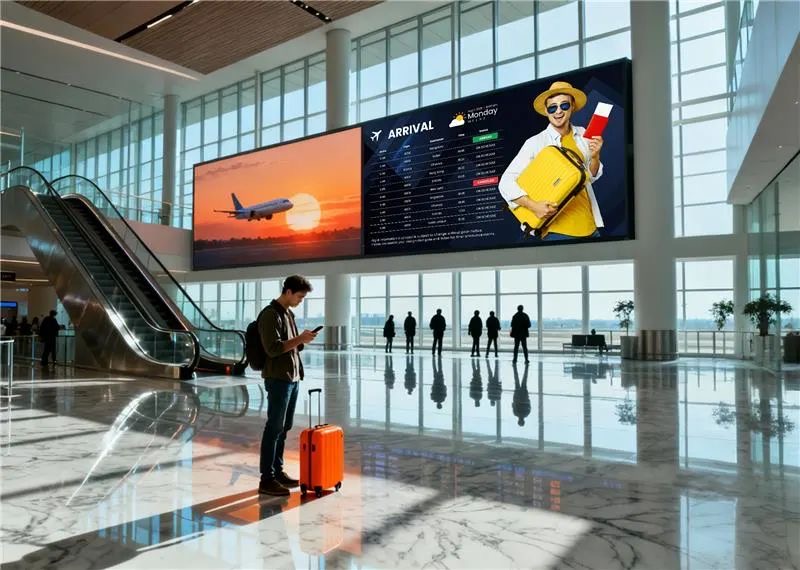
Airports- The Ultimate Wayfinding Challenge
Airports are among the most complex public environments in the world. Passengers navigate check-in areas, security checkpoints, immigration zones, retail areas, lounges, boarding gates, and baggage claim facilities. Add language barriers, time pressure, and constantly changing flight schedules, and the need for intelligent navigation becomes obvious. Future airport terminals will increasingly rely on dynamic architectural displays to communicate seamlessly with passengers. Imagine transparent glass walls displaying gate changes, boarding information, security wait times, personalized directions, and flight updates- all integrated directly into the architectural environment. This is where Hondel Lighting’s Transparent LED Screens become transformative. Installed on glass partitions, terminal facades, or interior walls, these displays deliver critical information while preserving openness, visibility, and natural light. The airport remains spacious. The information becomes immediate.
Shopping Malls Are Becoming Experiential Destinations
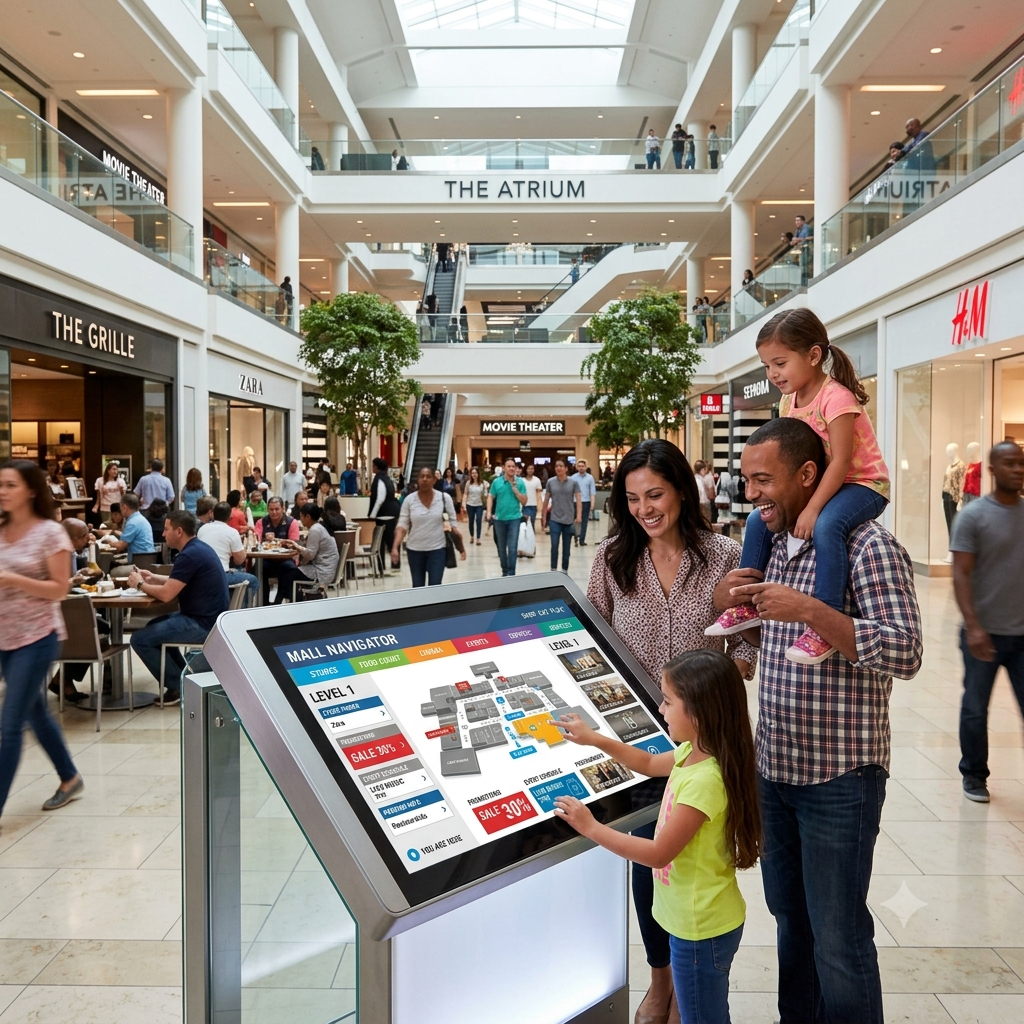
Modern shopping malls are no longer just retail centers. They are entertainment hubs. Dining destinations. Lifestyle spaces. Community gathering points. As these environments grow increasingly complex, visitors often struggle to locate stores, restaurants, entertainment zones, and services. Traditional mall directories frequently fail because they are static, difficult to update, and limited in functionality. Digital wayfinding changes everything. Interactive displays can provide store locations, promotional campaigns, event schedules, personalized shopping routes, parking guidance, and restaurant recommendations. Hondel Lighting’s Adhesive Flexible Transparent LED Screens offer an especially elegant solution for retail environments. Applied directly onto existing glass surfaces, these ultra-thin displays transform storefront windows, atriums, and mall entrances into dynamic navigation platforms without obstructing transparency. The result is navigation that feels natural, immersive, and engaging.
Transit Hubs- The Nervous System of Smart Cities
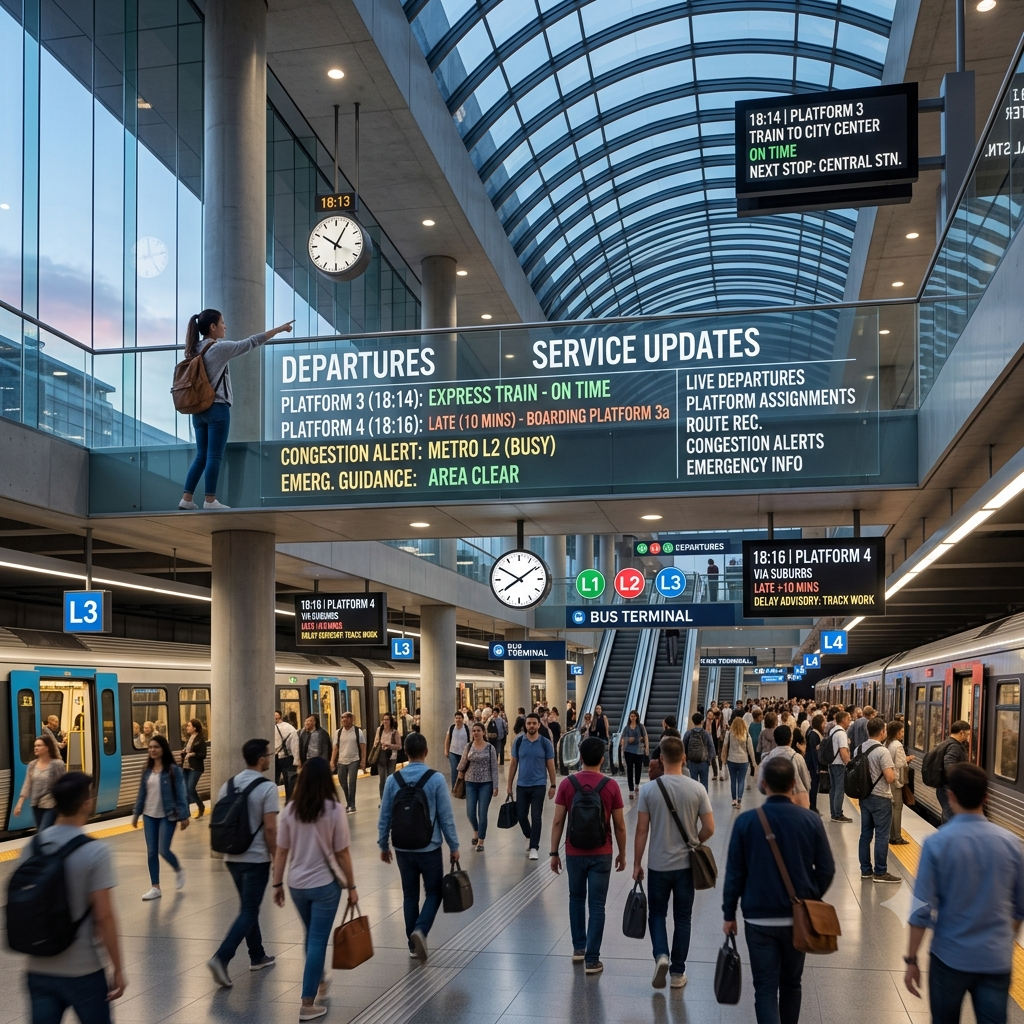
Railway stations, metro systems, and bus terminals are rapidly evolving into interconnected mobility ecosystems. Millions of passengers depend on accurate information every day. Delays. Platform changes. Service interruptions. Emergency situations. Static signage simply cannot respond quickly enough. Future transit hubs will increasingly feature architectural wayfinding systems capable of updating instantly. Passengers will receive real-time departure information, dynamic platform assignments, route recommendations, congestion alerts, and emergency evacuation guidance integrated directly into the built environment. Rather than overwhelming travelers with dozens of signs, information will appear exactly where and when it is needed.
When Glass Becomes a Navigation Interface
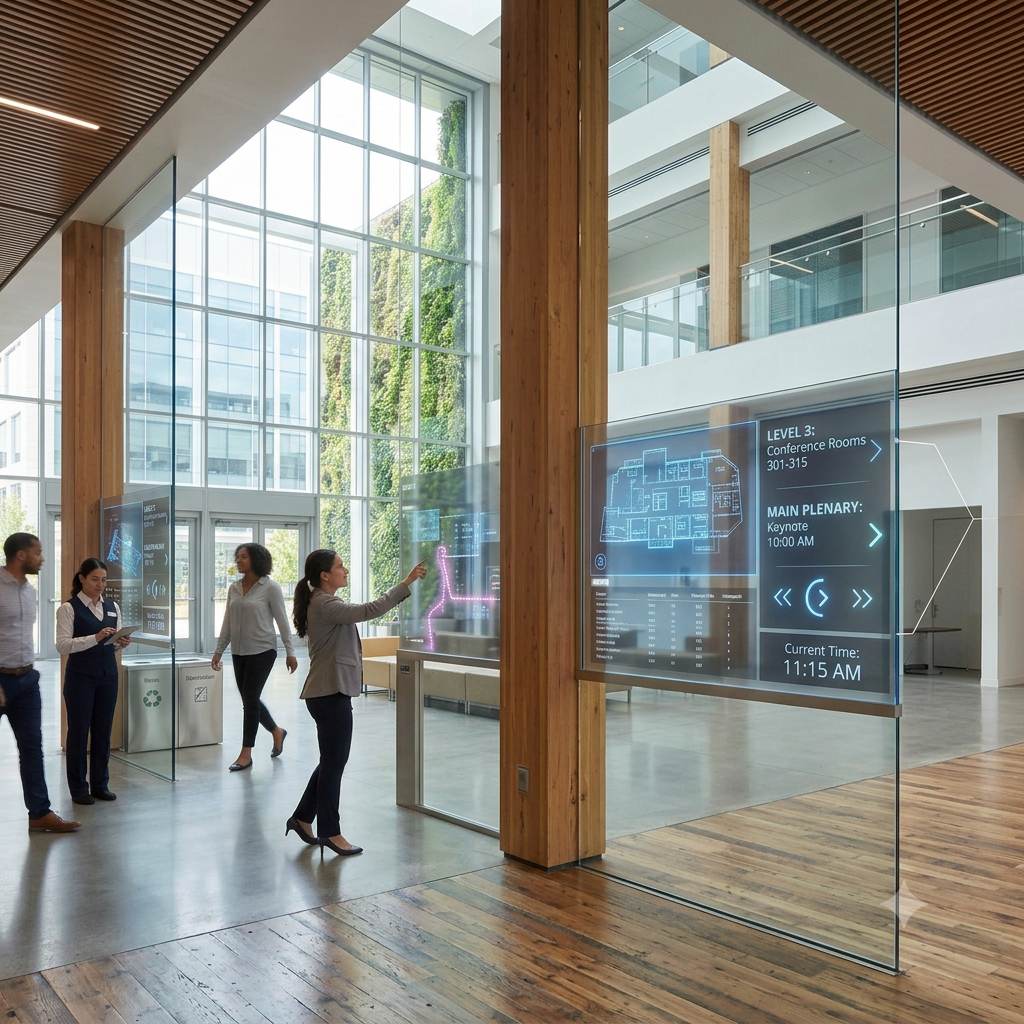
Modern architecture heavily relies on glass. Airports. Shopping malls. Transit centers. Corporate campuses. Glass creates openness and enhances user comfort. But what if glass could also guide people? Hondel Lighting’s Integrated Media Glass transforms ordinary architectural glass into an intelligent communication surface. When inactive, it maintains a sleek, elegant appearance. When activated, it becomes a sophisticated digital interface capable of displaying directional information, interactive maps, safety instructions, public announcements, and real-time updates. The technology disappears into architecture. The user experience becomes seamless.
The Power of Real-Time Data
The future of wayfinding lies in data. Connected buildings continuously generate information regarding occupancy levels, crowd density, queue lengths, traffic patterns, and environmental conditions. When integrated with digital facade systems, this data becomes actionable. Imagine:
This data-driven approach creates safer, smarter, and more efficient public spaces.
Personalized Navigation: The Next Frontier
Future digital wayfinding systems will become increasingly personalized. Imagine entering an airport and instantly receiving customized navigation based on flight details, preferred language, accessibility requirements, and current location. Similarly, shopping malls may provide personalized store recommendations and optimized routes. Smart transit systems may suggest the fastest multimodal journey in real time. Architectural display technologies will serve as the visual interface for these personalized experiences.
Sustainability and Digital Wayfinding
Digital wayfinding also supports sustainability goals. Replacing printed directories and temporary signage reduces paper consumption, material waste, and frequent replacement costs. Dynamic digital systems allow information updates without physically replacing signs. Transparent display technologies further contribute by preserving natural daylight, architectural transparency, and open spatial experiences. Hondel Lighting’s transparent display ecosystem enables facilities to modernize navigation while maintaining sustainable design principles. Thus, through the use of modern technology, digital wayfinding has never been easier before. It’s very easy nowadays to find the exact location, the exact route, or the exact place where we want to go. Modern wayfinding transforms navigation from a stressful puzzle into a seamless, almost invisible backdrop to our daily lives.
Designing Human-Centered Spaces
At its core, wayfinding is about people. Poor navigation creates stress. Confusion. Anxiety. Missed opportunities. Great navigation creates confidence. Comfort. Efficiency. Enjoyment. The future of digital wayfinding is not merely technological. It is profoundly human. By integrating intelligent displays into architecture, designers can create environments that communicate naturally and intuitively. Spaces begin to anticipate needs. Buildings become helpful companions. Navigation becomes part of the experience itself.
The Future- Buildings That Guide Us
Tomorrow’s airports, malls, and transit hubs will not rely on isolated signs. They will function as integrated communication ecosystems. Glass walls will provide directions. Facades will display live information. Architectural surfaces will respond dynamically to changing conditions. Through innovations such as Transparent LED Screens, Integrated Media Glass, and Adhesive Flexible Transparent LED Screens, Hondel Lighting is helping transform public infrastructure into intelligent, connected environments. Because in the future, buildings won’t simply house people. They will guide them.
As urban environments become increasingly complex, digital wayfinding will play a vital role in shaping smarter, safer, and more user-friendly public spaces. The convergence of architecture, real-time data, and transparent display technology is redefining how people move through airports, shopping malls, and transit hubs. With innovative solutions from Hondel Lighting, navigation is evolving from static signage into immersive, intelligent communication. The future of wayfinding is dynamic. The future is connected. And the future is already here.

تهدف Hondel إلى تقديم خدمة عالية الجودة لكل عميل. من بين منتجات LED الأكثر شهرة لدينا، يوجد حل لكل مشكلة إضاءة قد تواجهها. نحن خبراء في مجال إضاءة الواجهة. بالإضافة إلى ذلك، نحن نقدم لعملائنا تجهيزات الإضاءة الأكثر تميزًا - بغض النظر عن مدى تعقيد المشروع.
 English